Peace Crane by Hilary Taylor

Peace Crane by Hilary Taylor
Picture by Justin Wyatt
To read Hilary's story buy this special book...

This magical story has a touch of the supernatural. When an injured crane is found and nursed, something happens, something magical and inspiring...

Gentle Footprints launched- AS SEEN ON TV

Gentle Footprints was officially launched Fri June 4th at the Hay Festival with guest speaker Virginia McKenna and some of the authors


Buy from Bridge House Publishing by clicking on the link BUY:

BUY


Virginia McKenna at Hay Launch

Virginia McKenna at Hay Launch

Animal Anthology To Raise Funds for Born Free

Bridge House Publishing announce new book coming Spring 2010. For more about Bridge House please see their website.
This book is the annual charity book for Born Free...if you want to get involved with promoting and selling this book- email me!

www.bridgehousepublishing.co.uk


Visit the Born Free Website to find out more about their valuable work...

Visit the Born Free Website to find out more about their valuable work...
KEEP WILDLIFE IN THE WILD

Monday, 8 February 2010

The Lion in Literature and Film

Literature is rich in lions, from the lions of Daniel and Samson to the cowardly lion in ‘The Wizard of Oz’. The lion is found in many of Aesop’s fables, and the ancient tale of Androcles and the lion is about a gratetful lion who had a thorn removed from his paw.

One of the most famous lions in literature is Aslan from ‘The Lion The Witch and The Wardrobe’. Although Lewis intended to put forward a strong Christian message, (though he apparently didn’t agree it was an allegory on the story of Christ), it stands alone as a wondeful tale that transported myself and thousands of other children to the magical land of Narnia. I remember been distraught and shocked at the death of Aslan, and immensly relieved by his return. I really believed another world was was possible, even to the extent that I checked the back of my wardrobe for snow!

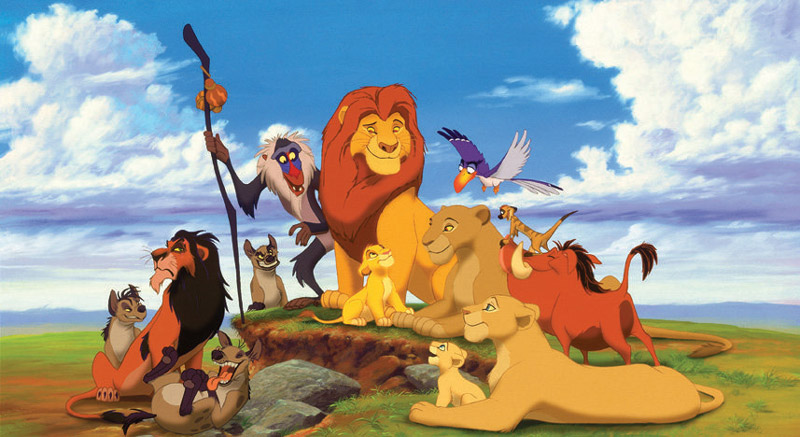
The Disney film The Lion King 1994 is still one of the most popular stories for children. It has since become a successful musical on Broadway and in the West End.
Again the lion is represented as courageous as well as determined brave, and a force for justice. Perhaps that’s why it’s so popular – we all need our heroes.


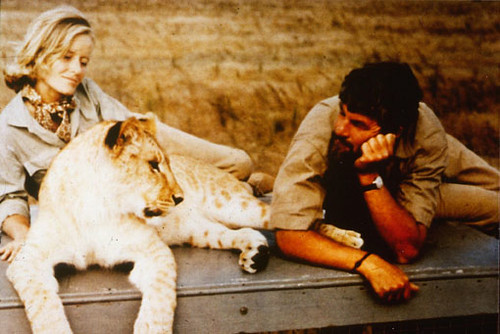
The 1966 film Born Free has touched many of our lives also. I saw this in a small cinema in Chesterfield when I was very young. It had a large impact on me, not least because it was on the big screen and in colour! We had a TV but obviously black and white, so to see the sights, sounds, and lions of Africa was a huge treat for a youngster. The soundtrack sung by Matt Monro was a hit and is still evocative when heard today. I so excited that the star of the movie Virginia McKenna will be at the Hay-on-Wye book launch in June!

Click this link to see a clip from the film: http://www.imdb.com/video/screenplay/vi3216703769/
Click here to hear Matt Monro singing Born Free against a backdrop of lion pictures: http://www.authorstream.com/Presentation/pacific2000-194337-born-free-nature-wildlife-lions-africa-music-bornfree-mattmonro-travel-places-ppt-powerpoint/
Lion quotes
As I mentioned in an earlier post the lion is part of our national and wider culture. We often use phrases in everyday life without thinking about it. For example, the lion’s share, into the lion’s den and lion hearted. I found a few lion quotes from famous people also.
“I was the shyest human ever invented, but I had a lion inside me that wouldn’t shut up!” Ingrid Bergman
“The fox provides for himself, but God provides for the lion.” William Blake
“I am impelled, not to squeak like a grateful and apologetic mouse,but to roar like a lion out of pride in my profession.” John Steinbeck
“I may not be a lion, but I am lion’s cub, and I have a lion’s heart.”
Queen Elizabeth I
“I was not the lion, but it fell to me to give the lion’s roar.” Winston Churchill
Tomorrow check back here for lion facts!

Sunday, 7 February 2010

WEEK OF THE LION 6th Feb - 12th Feb


A little about me…

Hi I’m Mandy, the most thrilled person in the universe. Why am I so thrilled?
I am amongst the 19 lucky authors chosen to be published in the ‘Gentle Footprints’ anthology. Like Dulcie who gave us the Week of the Bear, I was hoping against hope to be included in the anthology alongside Richard Adams, and also to have the patron of Born Free Virginia McKenna to promote such a worthy cause.

I was born in Sheffield South Yorkshire. Ever since I was knee high to a grasshopper (do they have knees?), I have written short stories and poems. I must have been about eight when I pestered my parents to buy me a petite typewriter for Christmas and I carried on from there. The only subjects I liked at school were English and History and I was inspired by the war poems of Wilfred Owen. I continued to write bits and bobs and took refuge in writing during the teenage angst years!

I left school at sixteen with no qualifications to speak of and had a variety of jobs including hairdressing and working in a factory. I was married at eighteen and had my daughter Tanya at nineteen. After many twists and turns, including a move to Bristol and a second marriage to my husband Brian, I ended up being a teacher, but I never stopped writing and my heart has always belonged to it.

My story is called ‘All Things Under the Sky’ I wrote it back in September sitting at the top of my garden in the shade with a lead to the laptop. I think it helped centre my thoughts on the open veldt of Africa. (I know Bristol is not quite the same, but you get my meaning). I knew that the Born Free Foundation was synonymous with the lion, and therefore never considered any other animal for my story. Of course I have since found out that the foundation helps lots of animals.

My characters just came to life and told the story themselves. Of course I had an idea about where the story was going but as happens so often when I write, the characters take on a life of their own and I often just follow their lead.


I have always had a love of big and domestic cats and have shared my life with the latter for as long as I can remember. I saw the film Born Free when I was again vertically challenged and it had a big impact on me. I have always been opposed to the caging of any wildlife and have refused to visit zoos sometimes at the puzzlement of others. They argue that zoos are not like they used to be – nevertheless I don’t feel comfortable viewing creatures behind bars. I also fail to see how shooting animals for sport can have any beneficial effect on humans.


My story focuses on the development of a young male lion Jubari as he is on the verge of leaving the pride. He learns from his father Lencho the head of the pride about the dangers of man and the nature of some of our kind.


Excerpt from ‘All Things Under the Sky’

“Many years ago there were no limits to our hunting grounds and the hind leg walkers had only a few dens here. Now their dens are increasing. There are many barriers of stone and sharp vine that sometimes kills an animal if they touch it. Our hunting land is smaller because of this, but we have tried to keep away from their dens. In the old times the dangers were not known, and a few of our kind wandered too near to the dens. They were seen, and the killing sticks took two of us and wounded another. This one was not too badly hurt but couldn’t run away. They threw him in a small pen with sticks driven round him in the ground. He couldn’t escape and the sticks were too hard to bite through.”
Lencho stopped for a second and said, “Now Jubari, what I am about to tell you is upsetting but you must hear it. When you have heard it you will never forget it.”
Jubari looked at his father and for once was at a loss for words. He didn’t want to hear it but he knew he must.
“The two dead lions were skinned and their coats adorned the bodies of the hind leg walkers. One of the heads was set on a sharp stick and shook at the pen, taunting the wounded one. They made strange sounds like hyenas, and drank liquid from shiny objects. They jabbed the wounded one with sharp sticks and cut his great mane about. They fetched blood along his back, and all the time howled and drank. They did not eat the flesh of the dead ones, and since that time, they have been observed sometimes killing animals and leaving them to rot on the plain.”
Jubari could stand it no longer and he leapt up crying,
“What are these creatures who would take the life of another for no reason, to kill but not eat? I will find these hind leg walkers and kill them all!”
“Silence Jubari! Have you learned nothing so far? You wouldn’t stand a chance against them. Even if all of our kind joined together we could not beat them.”


In later posts I will be sharing information about the lion in culture, literature and everyday life. I will also include lion facts, and of course information about the fantastic work of the Born Free Foundation!


The Lion in History and Culture

When researching all things lion, I found that they have been part of European and indeed world culture for as long as humanity has been civilised. In fact evidence suggests that it was even earlier if you take the cave paintings of the Grotte Chauvet in southern France into consideration. Paintings of lions were found there in the 1990s which are thought to be 32,000 years old!

We seem to have always had a fascination with their beauty, strength, power and grace and have tried to capture this in many ways for example in paint, literature, sculpture and heraldry. Some unenlightened people have also captured them physically and hunted them to show the world that they are braver, stronger, and more powerful. It is against these people that the Born Free Foundation and other organisations fight a constant battle.

The lion appears in the most ancient sculptures of Babylonia and Assyria. They were seen to be the guardians of the portals. In Ancient Egypt the lion’s body – a symbol of power, virtue, and wisdom was often given the head of the ruler of the day. The Sphinx is the most famous of these ruler-lion sculptures.

Closer to home and the present, there are lion sculptures everywhere!
They have been used in public buildings and monoliths to create a sense of majesty and awe. We see lions in Trafalgar Square, outside Buckingham Palace, the Lion of St. Mark in Venice, lions in Amsterdam, Munich and many other large cities in Europe.

Further afield there is a statue of a lion and cub in the Forbidden City Beijing China, and in Nairobi.


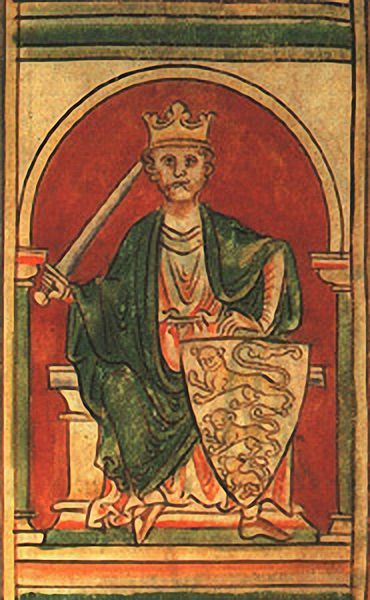
The lion has been a symbol of England since the middle ages, because The Three Lions was the emblem of 12th century King Richard I of England, more famously known as Richard the Lionheart.


The Three Lions now adorn the shirts of the England football and cricket teams. Not quite life or death bravery, though some would argue with me!


There is so much to say and I could go on, but I’d better not! Next time I’ll talk about the lion in literature and famous quotes!


Friday, 5 February 2010

Dancing Bear Facts

Finally for my Week of the Bear here are some dancing bear facts.

  • Dancing bears are usually taken as very small cubs with the majority of them being captured and mutilated at 1 years old or younger.
  • The people who capture and train the bears in Pakistan and India are called 'madaris'. Although the practice is illegal it still goes on.
  • Holes are burned through the bar's noses and ropes are threaded through. Pulling on the rope is one way to make the bears dance.
  • Bears are forced to dance up to 12 hours per day and their training is mainly managed through pain and starvatin.
  • Most bears live less than a third as long as they would have done in the wild.

So I hope you have enjoyed my Week of the Bear (if enjoy is the right word?!?). Thanks to everyone for reading and commenting.

Next week we have the Week of the Lion.

Dulcie
xxx

Thursday, 4 February 2010

Dancing Bears Footage

All

I promised you some dancing bear facts but unfortunately I am bringing you far more today. I debated long and hard with myself about whether to post a video of dancing bears. My thoughts against it were twofold. Firstly I didn't want to offend, and make no mistake these images are offensive. Secondly I was concerned that the images I brought you may have, at some point, benefited financially from the video.
I eventually decided to post the video. I decided that, though offensive, this issue is real and not one which the Born Free Foundation shy away from. I also found a clip which was produced and posted on You Tube by the World Society for Protection of Animals so hopefully no-one is benefiting financially from the footage.

So in my next post I will be bringing you some facts about the treatment of dancing bears but in advance of that here is a video from the WSPA.Please don't watch this if you think it may upset you.

Dulcie

Wednesday, 3 February 2010

Bear Facts


So we have dealt with a few light hearted and heart breaking beary bites but here are the bare facts. (See what I did there? I am soo witty - bear facts/ bare facts!Haha.)

Bears are characterised by their shaggy coats, short tails and their ability to walk with both heel and sole touching the ground.

There are seven different species of Bears:
1. Malayan Sun Bear
2. Sloth Bear
3. Specticled Bear
4. American Black Bear
5. Brown Bear or Grizzly Bear
6. Polar Bear
7. Asiatic Black Bear

In my story, Meena is a sloth bear.

Bears are native to North America, Europe, Asia and Antarctica and can be carnivores, herbivores or omnivores depending on what food is most readily available to them.

Though most people know that a baby bear is called a cub, not many people know that a female bear is a sow and a male bear is a boar!

Bears usually have cubs in litters of around four and hibernate for up to five months.

In my next post I will be getting back to the nitty gritty of dancing bears so bring your hankies!

Thanks for reading

Monday, 1 February 2010

Bears and Ballerinas


Everything is inspired by something right? It can be a bit traumatic to be a writer and suddenly realise that there is actually no such thing as a completely original story but once you come to terms with that terrifying fact it is actually quite liberating. You no longer feel the unrealistic pull of having to write something new and you can be inspired by what has already been written.

Most writing is influenced by everything a writer has seen, heard or read.All of this combines to create a writer. My story Meena was inspired by just one tale, The Red Shoes by Hans Christian Anderson.

The Red Shoes is the tale of a peasant girl who grows up vain and tricks her adoptive mother into buying her a pair of red shoes. She repeatedly wears the shoes to church, without paying attention to the service.

When her adoptive mother becomes ill the girl deserts her, preferring to attend a party in her red shoes. Once she begins dancing, she can't stop. The shoes take over. She cannot control them and they are stuck to her feet.

The shoes continue to dance, through fields and meadows, rain or shine, night and day. An angel appears to her, condemning her to dance even after she dies, as a warning to vain children everywhere.

The story actually continues far beyond this point but this is the section of it on which Meena is based.

In the movie version of The Red Shoes a ballerina dances to her death.

Meena is a bear cub who longs for more. She dreams of leaving her family to have adventures and her curiosity leads to her being captured. Her captors bring her up as a dancing bear. To find out if she dances to her death you will have to buy the book ;-)

Coming soon..... a few basic facts about bears. See you then!